
Colorado Parole Board Releases
The Colorado State Board of Parole is the release-decision body for state-prison parole. In Delta County release research, it is relevant for people sentenced to CDOC, people released from Delta Correctional Center, and people whose CDOC profile points to parole eligibility, a parole hearing, a parole grant, revocation, rescission, or discharge from parole. It is not the correct first stop for a person who only bonded out of the Delta County jail.
The CDOC offender-search application includes a public parole-board calendar at the CDOC parole-board page. Research found that the calendar is organized by month and shows scheduled hearings. A hearing entry is a schedule source, not final proof that the person has been released. To confirm an actual release, compare the hearing context with the CDOC offender profile, VINE notification, and any CDOC or parole-board records response.
| Parole source | What it helps confirm | Limit |
|---|---|---|
| Board website | Agency process and public information | Not a county jail roster |
| CDOC parole calendar | Scheduled monthly hearing events | Schedule is not a release decision by itself |
| CDOC offender search | Status, facility, parole or discharge clues | CDOC says to confirm accuracy |
| Colorado VINE | Custody-change notices where covered | Not a certified court disposition |
Lookup Delta Parole Events
A parole lookup should begin with the CDOC record because the DOC number and offender profile connect the person to the state-prison system. Then use the parole-board calendar to see whether a hearing was scheduled. Finally, use CDOC status, VINE, and records confirmation to determine whether release, deferral, revocation, or discharge actually followed.
- Search the person in Colorado DOC offender search by DOCNO or name.
- Review the CDOC profile for facility, status, parole eligibility, mandatory release, discharge, or supervision clues.
- Check the public parole-board calendar for a scheduled hearing by date and facility context.
- Do not treat a hearing listing as proof of release without a status change or official confirmation.
- Use Colorado VINE for a custody-change alert when the person is still in a covered status.
- Use the Delta County court or probation office only if the matter is a local court case, not CDOC parole.
The Colorado State Board of Parole website is the statewide agency source for parole process information.
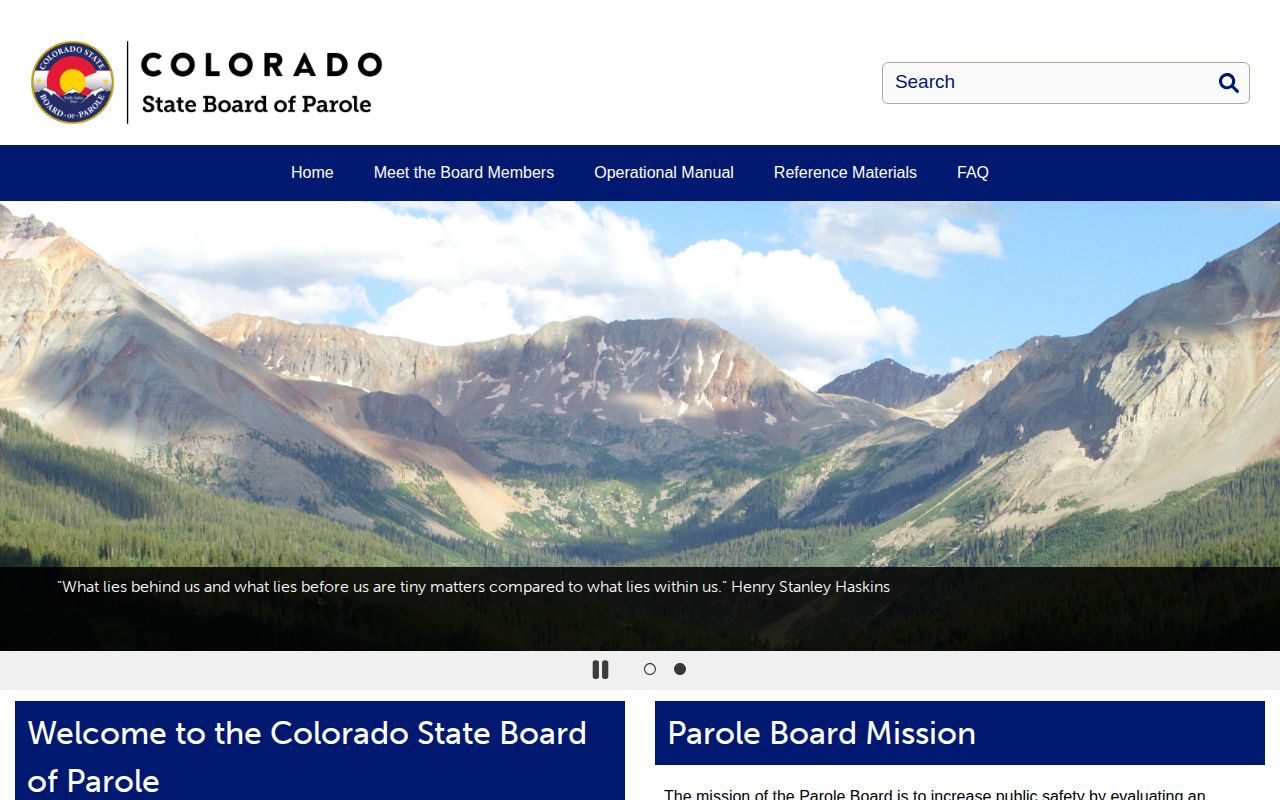
The Board source supports state-prison parole context, while CDOC status and VINE help confirm whether custody actually changed.
Parole Outcomes and Limits
Colorado parole materials describe several event types that can matter after a prison sentence. An application interview may be held before release. The Board may defer release, grant release to discretionary parole, refer a matter for full-board review, hold a rescission hearing before release, conduct a revocation hearing after an alleged violation, or discharge parole when the supervision term ends. These terms should be read as process events, not as automatic proof that a person is free of all supervision.
- Grant to parole
- A decision that may allow prison release to parole supervision if conditions are met.
- Deferral
- A decision that delays release consideration or release action.
- Rescission
- A process that can revisit a parole grant before the person is released.
- Revocation
- A process that can return a person to custody after an alleged parole violation.
- Discharge
- The end of the parole term when authorized and recorded by the controlling agency.
Delta Parole vs Probation
Delta County has both local probation and state-prison parole sources, and the two are easy to confuse. Probation belongs to the court-supervision lane and is checked through Delta County Combined Court and the Delta County Probation Office. Parole belongs to the CDOC state-prison lane and is checked through CDOC, the State Board of Parole, and VINE. A released county-jail detainee on probation should not be looked up as a parolee unless the person also has a CDOC prison case.
Parole eligibility rules are also prison-specific. Research identifies C.R.S. § 17-22.5-403 for general parole eligibility, C.R.S. § 17-22.5-405 for earned time, and Proposition 128 materials for specified crimes of violence committed on or after January 1, 2025. A Delta County jail sentence uses a different county-jail deduction statute. Use Inmate Release Date for the release-date distinction.
Board materials should also be read with timing in mind. A hearing may be scheduled, moved, deferred, or followed by another review. The public calendar is a way to identify the event and month, not a full name-level decision database. If the question is whether the person has already left a CDOC facility, the CDOC profile and VINE notification are stronger follow-up sources.
Delta County route: use parole sources for CDOC releases, and use court or probation sources for local court supervision.
Confirm Parole Release
A strong confirmation path uses more than one source. CDOC offender search may show status and dates. The parole calendar may show a hearing. VINE may send a release or transfer notification. CDOC or parole records may confirm final status. For a Delta County reader, the key is not to stop at the first calendar entry. A scheduled hearing is useful, but release confirmation comes from the status change and the agency that controls custody or supervision.
When a parole issue intersects with a Delta County case, preserve the custody split. A person can have a local court case in Delta County and a separate CDOC parole matter. The local court may show a new filing, warrant, or disposition, while the parole side may show revocation, rescission, or return-to-custody issues. Matching the person by DOC number, case number, and date avoids mixing two separate records.
The Board FAQ and calendar materials should be used as process and schedule sources. They are strongest when paired with the offender profile because the profile links the person to CDOC custody and status. Delta County court records remain separate unless a new local case or warrant appears.
For Delta County users, the parole-board route should be used only when the person has a CDOC state-prison connection. A county-jail release into probation is verified through the Delta County court case and the local probation office, not through the parole hearing calendar. If the custody history includes Delta Correctional Center or another CDOC facility, then the parole-board calendar can help explain a hearing event.
The calendar should also be paired with the date being researched. A hearing listed before release may explain a pending decision, while a later entry may relate to revocation, reconsideration, or another supervision event. Delta County court records may show a separate local case, but the parole decision itself remains a state-prison supervision record.
Note: A person can leave prison on parole while still being supervised, so release from a facility is not always the end of correctional control.